
Material Histories
A Small Hosiery Label Carries More Than a Brand Name
Read a museum description of a nylon hosiery label by separating brand, size, material wording and price instead of collapsing them into a single object date.

Read a museum description of a nylon hosiery label by separating brand, size, material wording and price instead of collapsing them into a single object date.
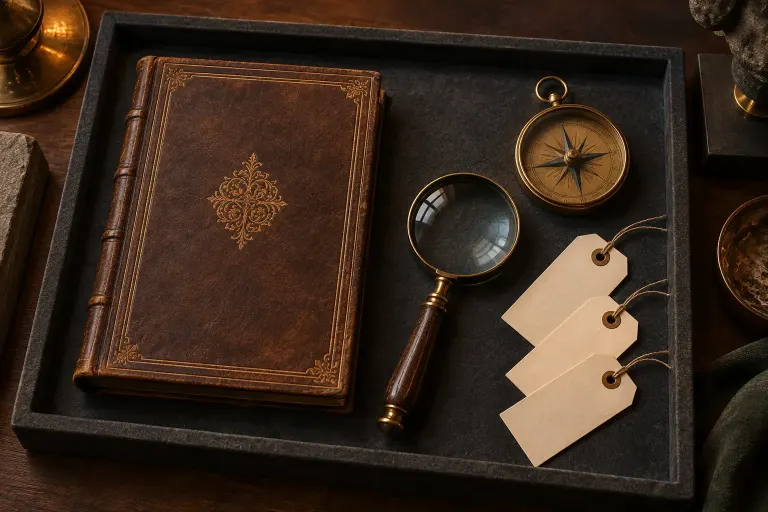
Create a concise object label with an identity, one supported detail and a visible uncertainty, without squeezing an entire collection history into a paragraph.
Prepare open questions about a family object, record whose memory you are hearing, and separate recollection from information confirmed by documents.
Compare historical product listings by their stated model, date and features, rather than assuming similar pictures describe exactly the same version.
Keep packaging dates separate from an object’s manufacture and ownership history, and ask what evidence connects the box with the item inside.
Read a textile sample through its label, dimensions and purpose, while keeping what a swatch shows separate from the behaviour of a finished garment.
Describe an object’s surface without letting a coating stand in for its full material composition, using catalogue wording and separate observation notes.
Historical newspaper searches depend partly on machine-readable text. Check the scanned page before treating a missing keyword as a missing story.