
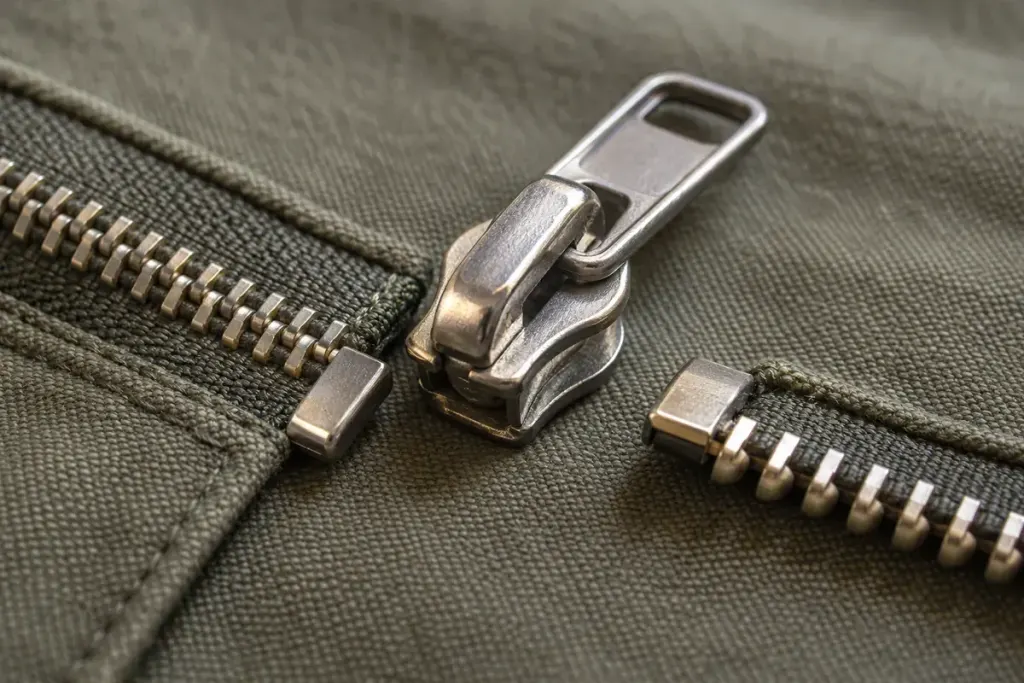
A zipper is easy to name and surprisingly easy to describe imprecisely. Separating its parts makes an object record more useful, especially when a photograph shows damage or a replacement.
- Elements: the two rows that interlock.
- Slider: the part that brings the rows together or separates them.
- Pull: the part used to move the slider.
- Stops: the limits visible at the ends.
Different zipper designs have different details, so use terminology appropriate to the actual object rather than forcing every example into one diagram.
Record the zipper’s location on the garment or bag and whether the tape is visible. If the material is uncertain, describe appearance first: “silver-coloured elements” is more defensible than naming a metal from a photograph alone.
Do not operate a fragile object to complete the description
For a museum object, follow the collection’s handling rules. A stuck slider is not an invitation to pull harder. A catalogue can accurately say that movement was not tested and still record the visible condition.
In a comparison note, keep a replacement claim separate from an observation. Different stitching beside the zipper may suggest a question, but it does not date the work or identify who performed it. Photograph the whole closure and one useful detail where permitted. Those two views explain how the component belongs to the object while preserving evidence that a close-up alone might crop away.
AI-generated editorial illustration; not a documentary photograph.