
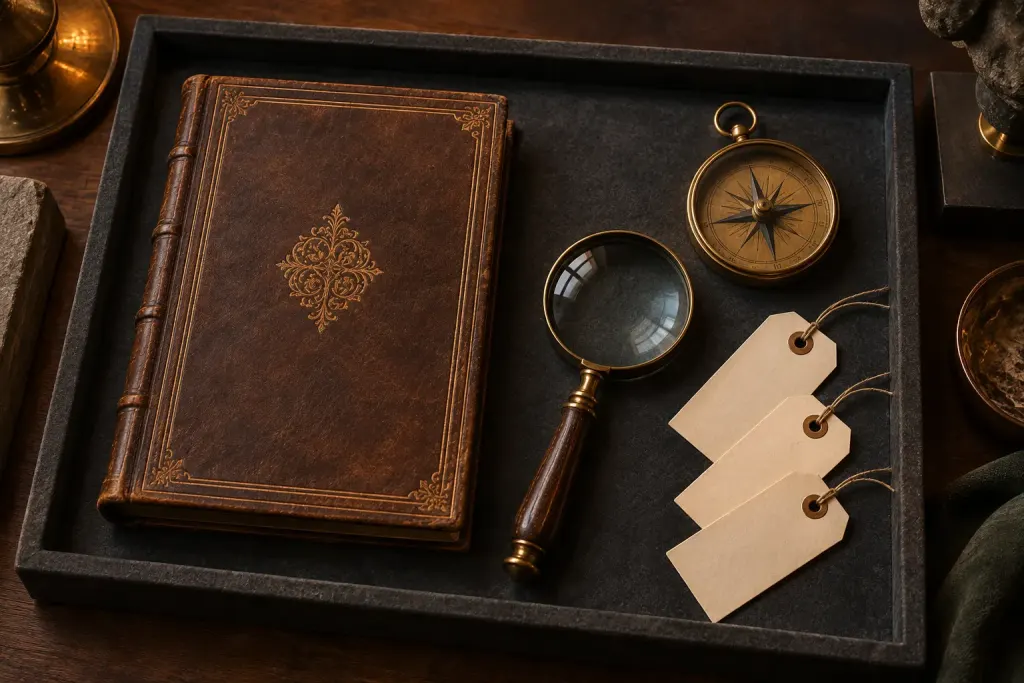
An object sits in a dated box, and the date seems to solve the mystery of when it was made. Before adding it to your catalogue, ask what the date describes and how the box became associated with the object.
Read the date in context
A date might belong to printing, an event, a document enclosed with the packaging or a later handwritten note. Record the wording around it rather than copying only the year.
For an invented example, a box bearing a dated shop receipt establishes that the receipt records a transaction. Further evidence is needed to connect that transaction to the particular object now stored inside.
Describe the association
Use wording such as “found stored in this box” if that is all you know. “Original packaging” is a stronger identification and should have a stated basis.
Compare model names, dimensions and other identifiers without forcing a match. Similar branding alone may not distinguish variants or later replacements.
Keep separate timeline entries
Make one line for the object, another for packaging and documents. Connect them only where evidence supports the relationship. A visible gap is better than a continuous story assembled from assumptions.
Do not discard packaging merely because it fails to date the object conclusively; it may still be useful evidence. See writing an object history with gaps for a way to preserve uncertain associations without presenting them as settled provenance.