
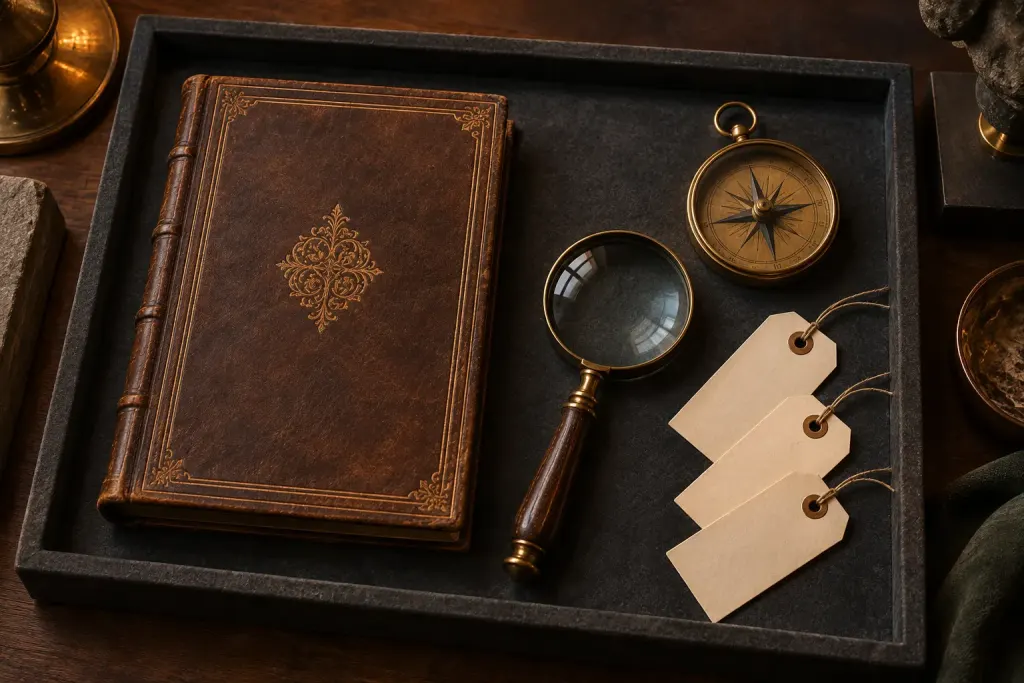
A museum display contains a modern reproduction of an older object. It is tempting to describe only the original design. Yet the reproduction in front of you has a making history of its own, and those two histories should remain visible.
Ask which object the date describes
A label may name an eighteenth-century design and a twentieth-century reproduction. Copy both dates with their roles. Writing only the earlier date could make a later teaching or display object appear to be an original survivor.
The same distinction applies to material. A reproduction may use a different substance or manufacturing process. Do not transfer the original object’s material description unless the record says it applies to this particular version.
Look for the relationship stated in the record
Words such as replica, facsimile, cast and reconstruction can signal different relationships, but institutions may explain their usage differently. Read the catalogue note rather than treating every term as interchangeable. If it names a source object, record that reference separately from the reproduction’s own identifier.
Give the later object a useful question
Why was this version made: teaching, display, research, commercial sale, or a purpose not documented here? Treat those as questions until evidence supports an answer. A reproduction can be useful evidence about how a later period studied or presented the past, even when it cannot demonstrate an earlier manufacturing technique.
This sits beside distinguishing a drawing from a finished product. In both cases, the relationship to an earlier idea matters. A precise note starts with what is physically present, then explains what it represents without collapsing the two into one object.