
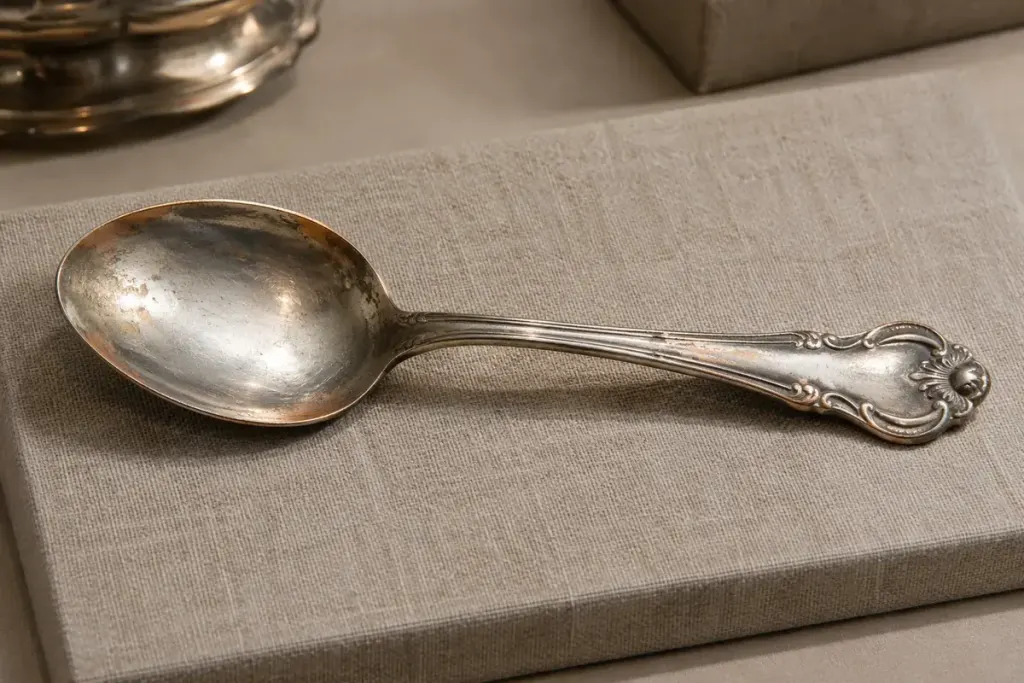
A bright serving dish can look like one material until a worn edge reveals something different. For a collector, that change is not merely a blemish. It may be a clue that the surface and the body of the object have different histories.
Silver plate puts silver over another material, rather than making the whole object from a silver alloy. That distinction matters when describing a piece, comparing catalogue entries or deciding which questions to ask a conservator. It cannot always be settled from a polished photograph.
Keep the process in the description
The Victoria and Albert Museum’s account of metalworking techniques distinguishes methods of plating, including electroplating and the fused sheet used for Old Sheffield plate. These are not interchangeable labels. The way the layers were made belongs to the object’s manufacture, even when the finished surfaces look similar.
If an auction description simply says “silver”, look for a more specific material statement elsewhere. Does it identify solid silver alloy, silver plate, a manufacturer, or a particular plating process? A seller’s shorthand should not become a confident catalogue attribution just because it has been copied into your own notes.
Observe before trying to improve the surface
Under ordinary diffuse light, examine accessible edges, raised decoration and the inside as separate areas. Record where the colour changes. Note joins and marks, but do not scrape an inconspicuous patch to discover what lies underneath. An apparently convenient identification test can permanently alter the object.
A useful preliminary record might read: “Warm-coloured metal visible on the highest ridge; material beneath the coating unconfirmed.” That is more defensible than assigning a specific base metal from colour alone. Lighting, tarnish, repairs and previous treatments can complicate what you see.
Photograph the whole piece and then the same detail at a consistent distance. Include the mark separately if it is legible. Keep any seller’s description attached to the record with its date, while distinguishing it from observations you made yourself.
Finally, resist treating every uneven area as a cleaning problem. A missing layer cannot be restored by polishing harder, and aggressive cleaning can remove more surface. If appearance is affecting an important identification or conservation decision, seek an assessment before treatment. A careful description can remain provisional; an abraded surface cannot be made provisional again.