
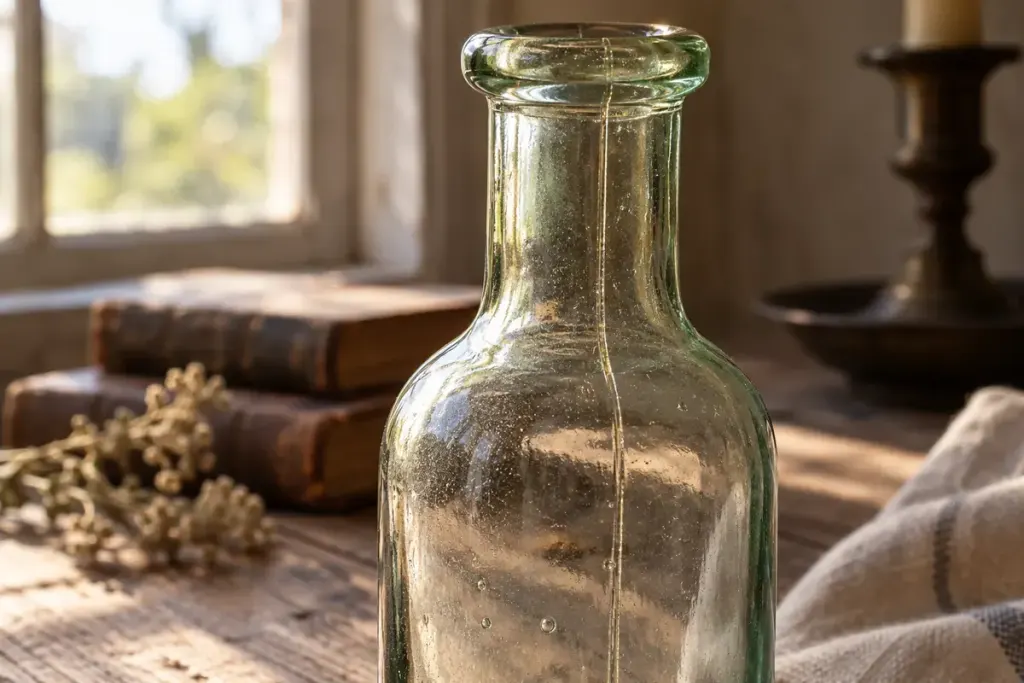
A fine line running up a glass bottle may be a trace of manufacture rather than a crack. Recognising a possible mould seam opens a question about how the bottle was formed, but it does not supply a complete production date.
Follow the line and its limits
With a sound object that can be handled safely, observe where the line begins, where it ends and whether another seam appears on the opposite side. Photograph the base and the neck finish as well as the body. If the object is fragile or part of a collection, follow the relevant handling rules and use existing images instead.
Keep the wording provisional when the feature is unclear. A scratch, crack and mould seam are different descriptions, and a poorly lit photograph may not distinguish them reliably. Do not run a finger along damaged glass to test it.
Combine evidence before assigning a date
The Historic Glass Bottle Identification guide’s discussion of body and mould seams cautions against simple seam-based dating. Bottle form, manufacturing features, marks and archaeological or collection context need to be considered together. A broad technique can remain in use across a long period, and later reproductions can imitate older shapes.
For a first record, write a physical description without a guessed year: “fine vertical line visible on the body, continuing toward the shoulder.” Then consult a specialist reference for that bottle type and region. A useful catalogue question identifies the feature and supplies several views; it does not ask an expert to confirm a date that was inferred from a single seam.
AI-generated editorial illustration; not a documentary photograph.